Showing posts with label Italy. Show all posts

Thursday, August 9, 2012

The climax and a little dolce

After waking your taste buds with a little antipasto lovin' and a nicely paired wine, your mouth, body, and soul are left wanting more. Thus enters the climax of the meal - the main course. If done correctly, it can be the defining moment of an evening, and it's success can either make or break your decision to return to a restaurant.

Usually a protein, vegetable, and a carbohydrate make up a main course, but these rules can be bent, especially when a meal consists of multiple dishes, such as those at the fine Tuscan restaurants we visited this summer. 

For me, the gold medal of main dishes went to the cannelloni filled with shredded beef and topped with cream of artichoke. The guinea fowl and pancetta-wrapped french green beans came a close second, and how can I leave out the glorious linguine with white truffles? 

Cannelloni filled with shredded beef and topped with cream of artichoke
These beauties were part of a divine meal we had at Ristoro di Lamole, a lovely establishment at the top of the Tuscan hills. Just when the winding road from Chianti to Lamole seems to be unable to offer views that are any more beautiful, this restaurant appears. If you didn't know any better, you would probably not give the place a second thought and drive on. Thankfully, the villa we rented was in Lamole, and the owner of the villa recommended the place as a must - she was right.
Guinea fowl and pancetta-wrapped french green beans
Linguine with white truffles and fresh crushed pepper
I learned to appreciate medium rare beef at culinary school and this is now my preferred way to enjoy a steak.
Apparently the Tuscans agree.
Tuscan white beans and sausage
Finishing off our sinfully delicious meals, we had our share of gelato, including chocolate and pistachio scoops from the famous Gelateria Perche no! in Florence (the place is aptly named "why not" in Italian). We also sampled some very refined versions of Italian classics, such as tiramisu and panna cotta, and they will forever hold a special place in my gluttonous heart. How can I describe my happiness in words? I'll let you discover what I mean when you travel to Tuscany and have a few scoops, spoon-fulls, and fork-fulls of your own. Some things are better left unsaid.


My all-time favorite Italian dessert - the Tiramisu.
This one in Lamole was one of the best I've had because the  mascarpone was just right.
Gorgeous panna cotta with strawberries.
A chocolate lava cake that was quite simply to die for.
As our family celebration continued, so did our seemingly insatiable appetite for good food. Lucky for us, Tuscany was the place to be. We resorted to unbuttoning our top buttons and using wine as an elixir to help digestion and thus make room for the grande finale of the Italian meal. We gluttons turned to the dessert menu as a drug that would take us to that moment during a good meal when you feel total bliss. A spiritual moment, really, for those of us whose religion involves praising the subtlety of a well-made dolce.

And thus I bring my Tuscan food entries to an end. It was an unforgettable vacation not only for the culinary genius of this part of the world, but because our family came together to celebrate love and the good things in life. It just so happened that some of the most special moments took place around a dinner table. Doesn't it often happen that way?

Monday, June 11, 2012

Tuscany entry II: Antipasti

My Tuscan culinary goodness saga continues with a description of some antipasti we enjoyed during our recent trip. After a few hours of walking around Florence, it's hard to think of a better way to prepare for a meal than sipping some Chianti and accompanying it with a nice prosciutto.


Tuscan antipasti
On two occasions we were given Tuscan bread topped with a delicious liver spread. Bruschetta, (which by the way is pronounced bru'sket:ta in English as well - there's no "sh" sound anywhere in that word, as I hear constantly in the US), is also common in Tuscan antipasti, as are artichoke hearts, salami of all sorts, and ewe's milk pecorino, one of my favorite cheeses.

I have to say something, for I cannot keep quiet about this after living in Paris and enjoying some of the best bread in the world. Tuscan bread sucks. It has no taste. Apologies, my dear Tuscans, but you need to put some salt in that dough. The crust is lovely, the inside fluffiness is nice, but insipid should be no part of anything Tuscan or Italian. I understand that you often top it with strong-tasting stuff like wild boar prosciutto and liver spread, so you may think that you need neutral bread, but for goodness sake please put some taste in those buns.

Now that I've successfully insulted Tuscan bread lovers as well as Tuscan bread bakers who are probably very proud of their generations-old bread baking techniques, I'll go on. 
Burrata and vegetable tian
Have you ever heard of this glorious thing called burrata? It is a thing to make you cry because it is so good. It is a fresh Italian cheese made from mozzarella and cream, and is so soft it feels like butter on your tongue. Actually, burrata means "buttered" in Italian. The dish photographed above is a quenelle of burrata served with a tian of roasted vegetables and a sun dried tomato sauce. Too bad for the tasteless Tuscan crouton on top, but I'll get over it. 
Olive oil tasting. The chickpeas offer a neutral flavor compared to the often bitter taste of the oil. 
Roasted vegetables with zucchini pesto and heavenly Chianti
Fantastic white wine from Umbria to accompany our antipasti
As part of the celebration of my parents' 40th wedding anniversary, we dined at Osteria di Passignano, a fantastic winery restaurant complete with its own Michelin star and a fabulous troupe of knowledgeable and amiable servers. It was a wine pairing extravaganza. The servers are well-trained sommeliers who taught us much about the wine we were drinking. It was a pageant of wines, olive oils, pestos, and flavors that had celebrations in our mouths. 

As my family's loving life saga continued, so did our adventure of eating our way through Chianti. The antipasti courses of our meals were exceptional, and only the beginning of a beautiful friendship with Tuscan food.

Friday, June 8, 2012

Tradition, legacy, and some Chianti

I'm back online after a shameful absence. Back with a fresh new blog look, a touch of Latin flavors, and surprises in between.

The last box was unpacked, and our apartment in Panama feels like home. My kitchen has a huge window, granite countertops, and a six-burner gas stove. My only fear is that the oven also runs on gas, which scares the living daylights out of me because I have to ignite the range while the lethal gas sputters out of the vents. I fear that my baking projects may be a bit screwy for the first few tries. There is no temperature option, just a 1-to-6 level dial. Mostly, however, I fear for my eyebrows.

I haven't been able to escape to the Panama City seafood market that I've been told is fantastic. Unpacking, cleaning, and organizing have been the norm around this place, so I also haven't been to Casco Antiguo, the old city of Panama, where I'm told there are wonderful restaurants. This blog will tell you all about those places, and more.

Before that, however, I'll take you on a little detour. We've just returned from Tuscany, where we celebrated my parents' 40th wedding anniversary. I did my best to chronicle the magical bites of pasta and sips of Chianti wine that we feasted upon, so the next couple of entries will tell you about the Italian delicacies we enjoyed.
Badia di Passignano vineyard and tractor, Chianti
In proper Italian fashion, I'll start with some antipasti, move on to the primi piatti, then secondi, and end with mouth-watering desserts and cheeses. The first Italy entry, however, begins with the nectar of Chianti gods: wine.
Renzo Marinai, family-run, organic, fabulous wine
During my visit to a couple of Chianti wineries, I discovered that I love the Sangiovese grape. Chianti Classico must use at least 80% Sangiovese in order to be considered as such. This grape is robust and deep, tasting of blackberries and the oak from the French barrels that the wine lives in for a while.
Renzo Marinai purchased a Chianti vineyard in the 1990s and created it into one of the first organic wineries in the region. He chooses to produce a small amount of wine, but at excellent standards. His 2008 Chianti Classico Reserva won a gold metal at the Los Angeles Wine & Spirits award, and I loved it.
Leonardo da Vinci came up with the technique on top of the barrel that prevents air from getting inside
Chianti is all about tradition. The Sangiovese grape was already around in the 16th century, and not much has changed in the way wine is made in this region. 
Sun dial placed by Galileo Galilei in 1587, damaged during WWII 
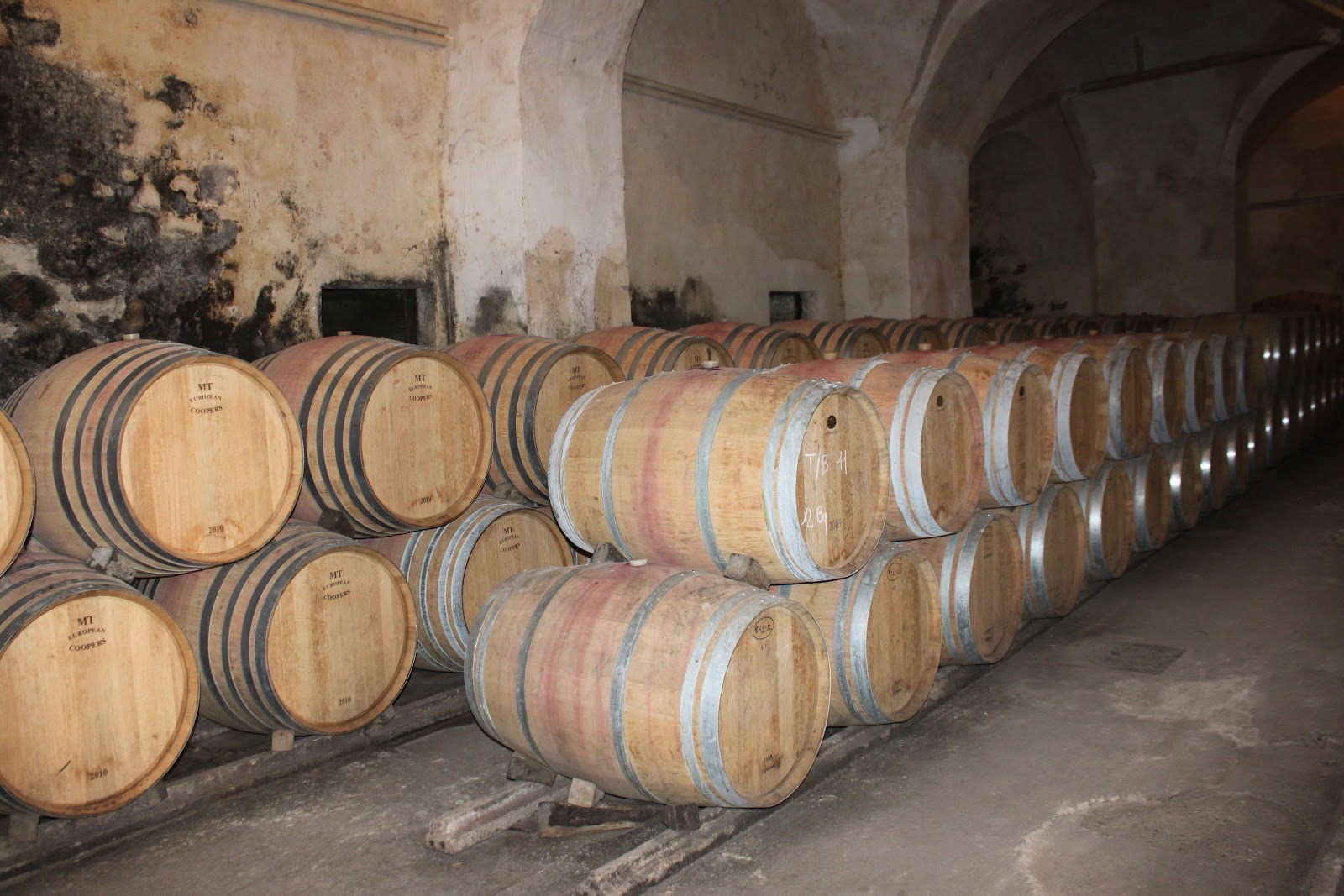
Badia di Passignano cellars - moldy walls since 395
For example, the Badia di Passignano cellars are located in a monastery that dates back to 395. Today, the Antinori family make the award-winning Chianti wines and use techniques that they've used for 600 years.
The Antinori family rents the monastery cellars from the Vatican

270 euro price tag, and worth every penny
Walking through the orderly emerald mazes of Chianti vineyards and feeling the reassuring dampness of cellars that have been making wine for centuries fills you with a profound respect for tradition and legacy. Even though we were learning about these wines, and enjoying their blood-red goodness, we were also celebrating our family's legacy. 

The 40 years of my parents' happy marriage is something to be proud of, and only the best, most exquisite meals and wine were good enough to commemorate our family's love and passion for the good things in life.